Knife Gate Valves for Wastewater Treatment | Where They Are Used and Why
Mar 28, 2026
by Hemal Mehta
Knife Gate Valves for Wastewater Treatment |
Where They Are Used and Why?
In wastewater treatment plants, valve performance has a direct impact on process reliability, maintenance requirements, and plant uptime. Knife gate valves for wastewater treatment are widely used because they are well suited for isolating sludge, sewage, slurry, and other solids-laden media where conventional valves may struggle with clogging or sealing.
From raw sewage isolation to sludge transfer, RAS/WAS handling, digester feed, and dewatering systems, wastewater knife gate valves are commonly selected for applications that require dependable shutoff in difficult service conditions.
In this guide, we explain where knife gate valves are used in wastewater treatment plants, why they are often preferred, and when they are the right choice for sludge and sewage service.
What Are Knife Gate Valves in Wastewater Service?
A knife gate valve is an isolation valve designed for on/off service in applications where the media may contain solids, fibers, sludge, or slurry. The gate (or blade) moves through the flow path to open or close the valve, making it suitable for services where solids can interfere with other valve types.
In wastewater applications, knife gate valves are commonly used in:
Municipal sewage treatment plants (STPs)
Effluent treatment plants (ETPs)
Industrial wastewater systems
Sludge handling and dewatering lines
Slurry and grit discharge systems
Because many wastewater lines contain abrasive particles, suspended solids, fibrous material, and sludge, the valve design must be chosen based on actual service conditions—not only pipe size
Why Knife Gate Valves Are Used in Wastewater Treatment Plants
Wastewater systems are rarely handling clean water alone. Many plant sections deal with:
Raw sewage with debris
Primary and secondary sludge
Return activated sludge (RAS)
Waste activated sludge (WAS)
Thickened sludge
Grit-laden slurry
Filter press and centrifuge discharge
This is why knife gate valves for wastewater treatment are often preferred.
Key reasons they are used:
1. Better Suitability for Solids-Laden Media
Knife gate valves are commonly selected for media that contains solids, sludge, or fibrous material, where reliable isolation is needed.
2. Lower Risk of Obstruction in Sludge Service
In sludge and sewage lines, valve performance can be affected by solids build-up. Knife gate valves are often chosen because they are better suited to these services than many general-purpose isolation valves.
3. Compact Installation
Many wastewater plants have limited pipe rack and equipment space. Knife gate valves often offer a compact face-to-face design that helps with installation and retrofit work.
4. Strong Fit for On/Off isolation
Most wastewater applications need isolation, not precision throttling. Knife gate valves are typically used where the main requirement is dependable open/close operation.
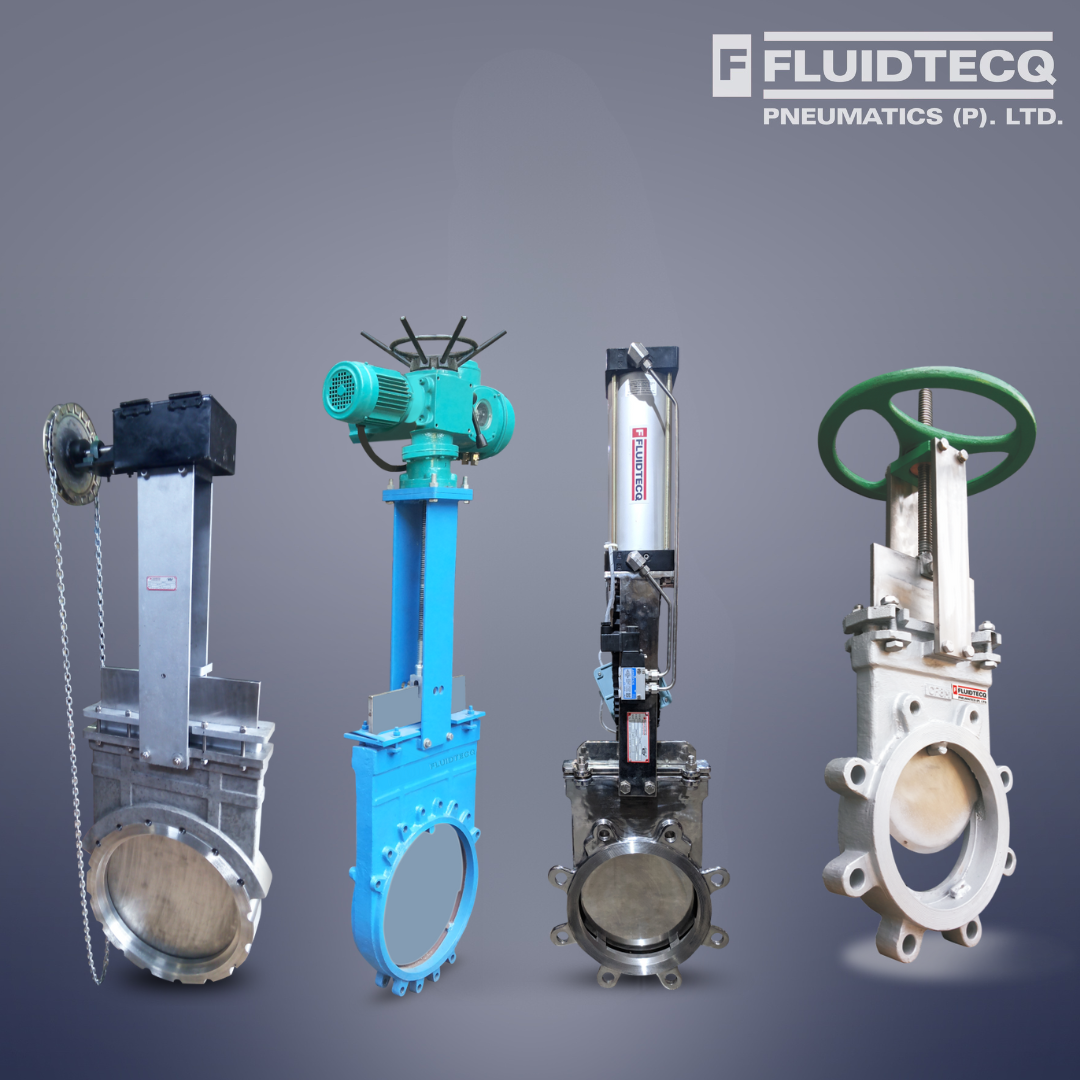
5. Easy Automation
For automated plants, knife gate valves can be supplied with:
Manual operation
Pneumatic actuation
Electric actuation
This makes them practical for filter press lines, sludge handling systems, and remote wastewater applications.
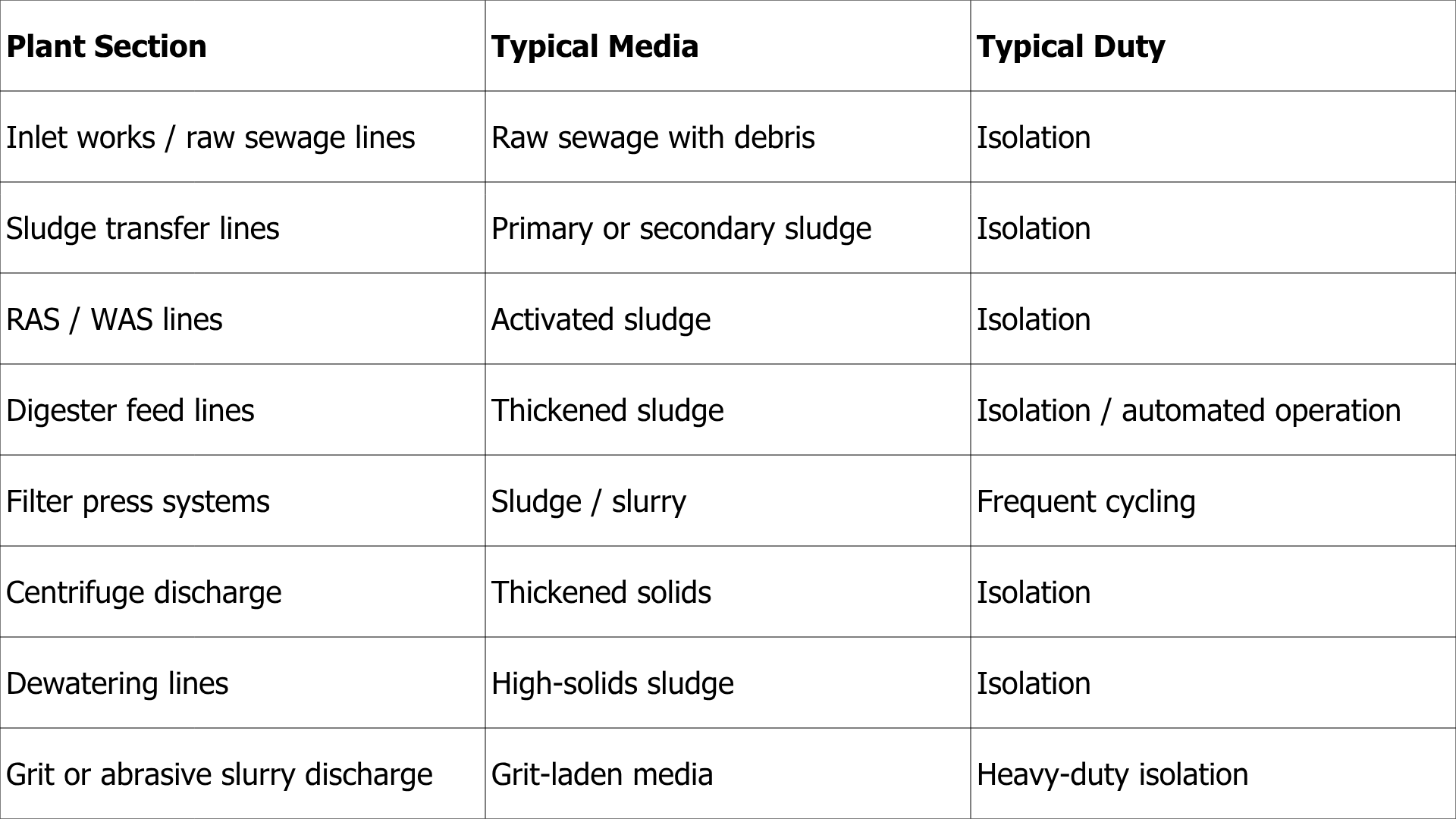
Typical Wastewater Knife Gate Valve Applications
These are the areas where wastewater knife gate valves are most commonly considered because the media is more challenging than clean water service.
When a Knife Gate Valve Is the Right Choice for Wastewater
A knife gate valve for wastewater treatment is usually a strong option when the application involves:
Sludge or slurry with suspended solids
Fibrous sewage media
On/off isolation duty
Low to moderate pressure wastewater lines
Frequent automated cycling
Services where solids may affect other valve types
Best-fit applications include:
Sludge transfer lines
Sewage branch isolation
RAS and WAS systems
Digester feed
Filter press feed or discharge
Dewatering lines
Grit and slurry handling
For many of these services, the valve must be selected based on:
media type
solids content
shutoff pressure
flow direction
actuation requirement
When a Knife Gate Valve May Not Be the Best Choice
A knife gate valve is not always the best valve for every wastewater line.
It may not be ideal when:
The application requires precise throttling or flow control
The line handles relatively clean water and another valve type is more practical
The service conditions require a valve specifically optimized for control rather than isolation
Shutoff conditions exceed the intended valve design
Depending on the application, engineers may also evaluate:
Butterfly valves
Plug valves
Pinch valves
Ball valves
Choosing the Right Knife Gate Valve for Wastewater Service
Even within wastewater applications, there is no single “one-size-fits-all” valve.
Before selecting a wastewater knife gate valve, review:
Media type (sewage, sludge, slurry, grit, thickened solids)
Solids content
Flow direction
Differential pressure at shutoff
Manual vs pneumatic vs electric actuation
Seat and material compatibility
Cycling frequency
For many sludge and sewage applications, bidirectional knife gate valves are often preferred because wastewater systems may experience backpressure or variable flow conditions.
Final Thoughts
Knife gate valves for wastewater treatment are widely used because they are well suited for sludge, sewage, slurry, and solids-laden isolation service. In wastewater plants, they are commonly installed in sludge transfer lines, RAS/WAS systems, digester feed, dewatering lines, and abrasive slurry handling applications where reliable shutoff is critical.
The right valve selection depends on more than just line size. For long service life and dependable performance, the valve should be selected based on:
media type
solids content
shutoff pressure
flow direction
actuation needs
service frequency
If you are selecting a valve for a wastewater treatment plant, sewage line, sludge transfer line, or dewatering system, it is best to review the process conditions before finalizing the design.
Need Help Choosing a Knife Gate Valve for Wastewater Service?
If you’re selecting a knife gate valve for wastewater treatment, the right choice depends on the actual application—not just the pipe diameter.
For better selection accuracy, review:
Line size
Media type
Solids content
Pressure conditions
Flow direction
Manual or actuated operation
Need help with valve selection for sludge, sewage, slurry, RAS/WAS, or dewatering duty?
Contact Fluidtecq with your process details for a more accurate recommendation




 by Hemal Mehta