Common Mistakes to Avoid When Procuring Knife Gate Valves
A Knife Gate Valve may appear to be a relatively straightforward isolation valve. However, its performance depends heavily on the process media, operating conditions, valve design, material selection, actuation and installation.
When procurement begins with only the line size and quantity, important engineering information is often missed. The resulting valve may fit the pipeline but still fail to perform reliably in the actual application.
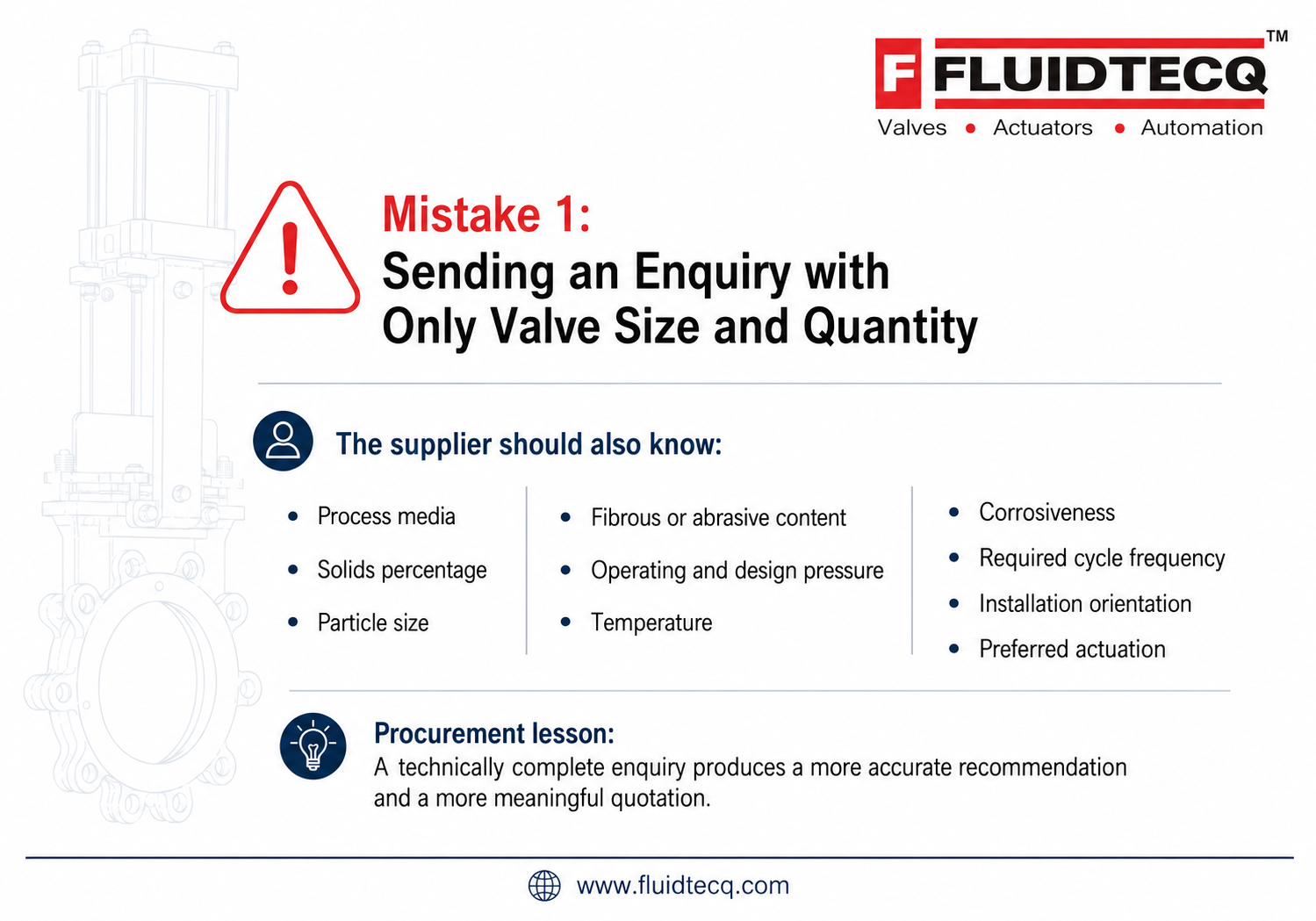
Mistake 1: Sending an Enquiry with Only Valve Size and Quantity
A request stating only “DN200 Knife Gate Valve—four numbers” does not provide enough information for responsible selection. The supplier should also know:
Process media
Solids percentage
Particle size
Fibrous or abrasive content
Operating and design pressure
Temperature
Corrosiveness
Required cycle frequency
Installation orientation
Preferred actuation
Procurement lesson: A technically complete enquiry produces a more accurate recommendation and a more meaningful quotation.
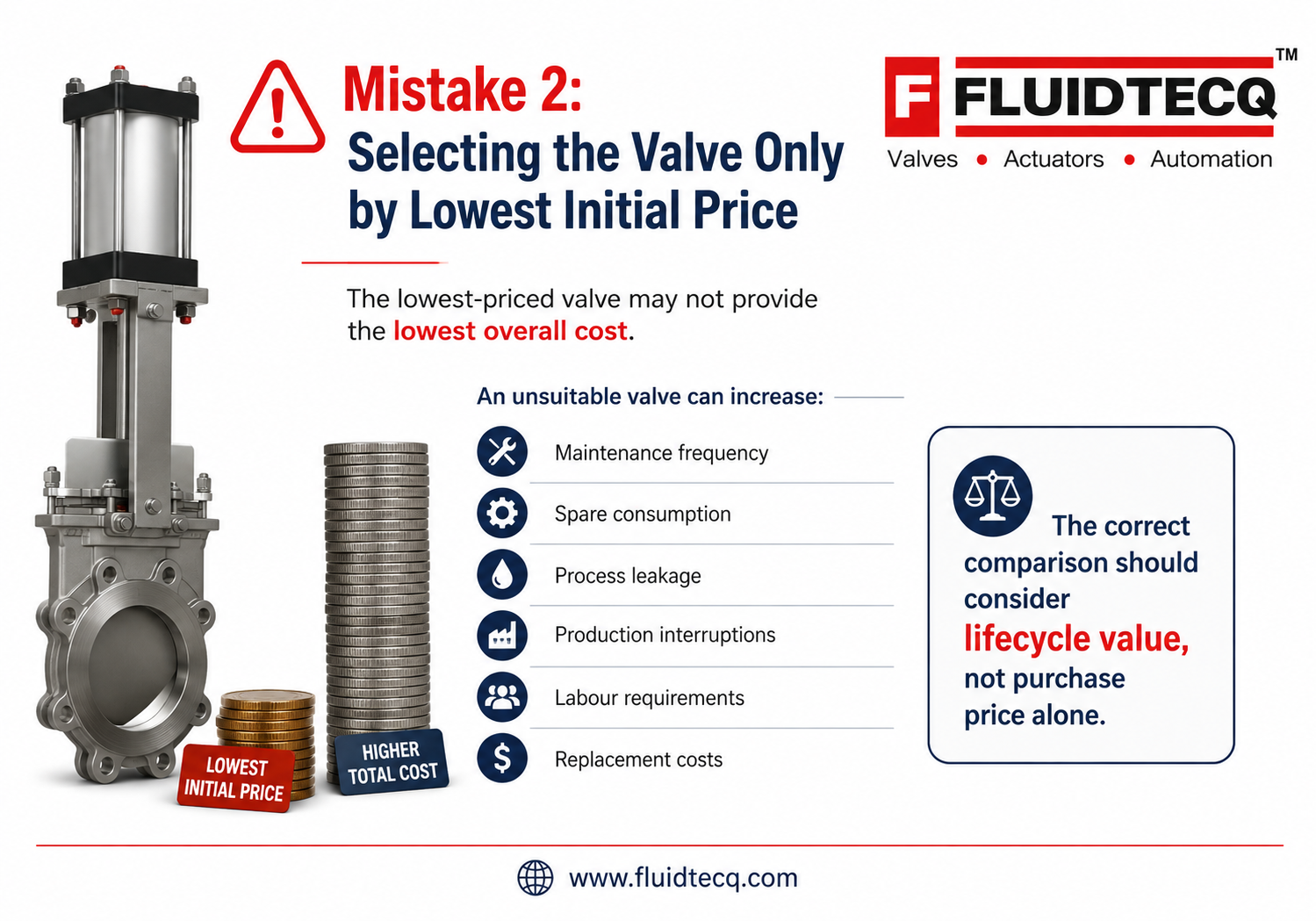
Mistake 2: Selecting the Valve Only by Lowest Initial Price
The lowest-priced valve may not provide the lowest overall cost.
An unsuitable valve can increase:
Maintenance frequency
Spare consumption
Process leakage
Production interruptions
Labour requirements
Replacement costs
The correct comparison should consider lifecycle value, not purchase price alone.
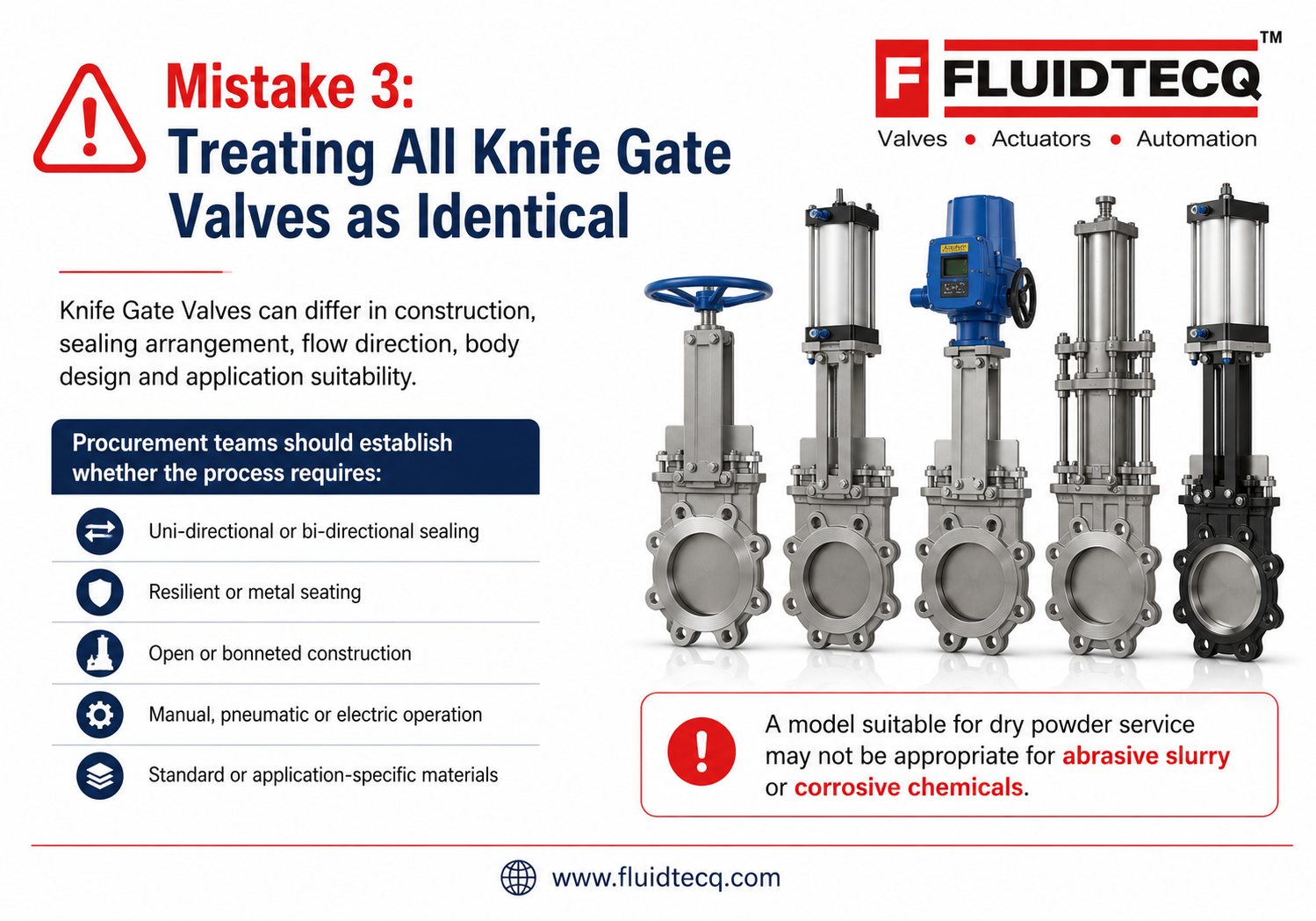
Mistake 3: Treating All Knife Gate Valves as Identical
Knife Gate Valves can differ in construction, sealing arrangement, flow direction, body design and application suitability.
Procurement teams should establish whether the process requires:
Uni-directional or bi-directional sealing
Resilient or metal seating
Open or bonneted construction
Manual, pneumatic or electric operation
Standard or application-specific materials
A model suitable for dry powder service may not be appropriate for abrasive slurry or corrosive chemicals.
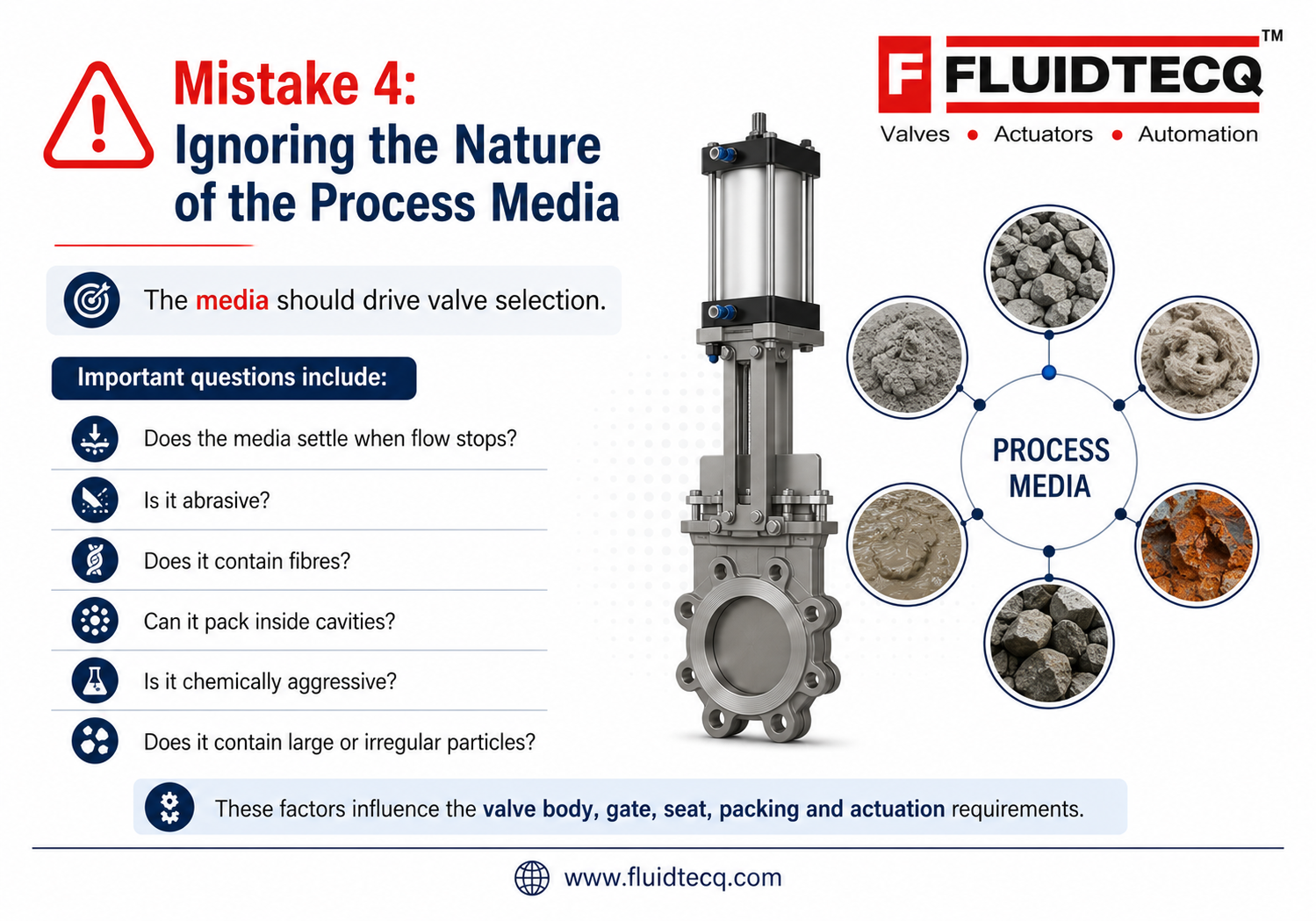
Mistake 4: Ignoring the Nature of the Process Media
The media should drive valve selection.
Important questions include:
Does the media settle when flow stops?
Is it abrasive?
Does it contain fibres?
Can it pack inside cavities?
Is it chemically aggressive?
Does it contain large or irregular particles?
These factors influence the valve body, gate, seat, packing and actuation requirements.
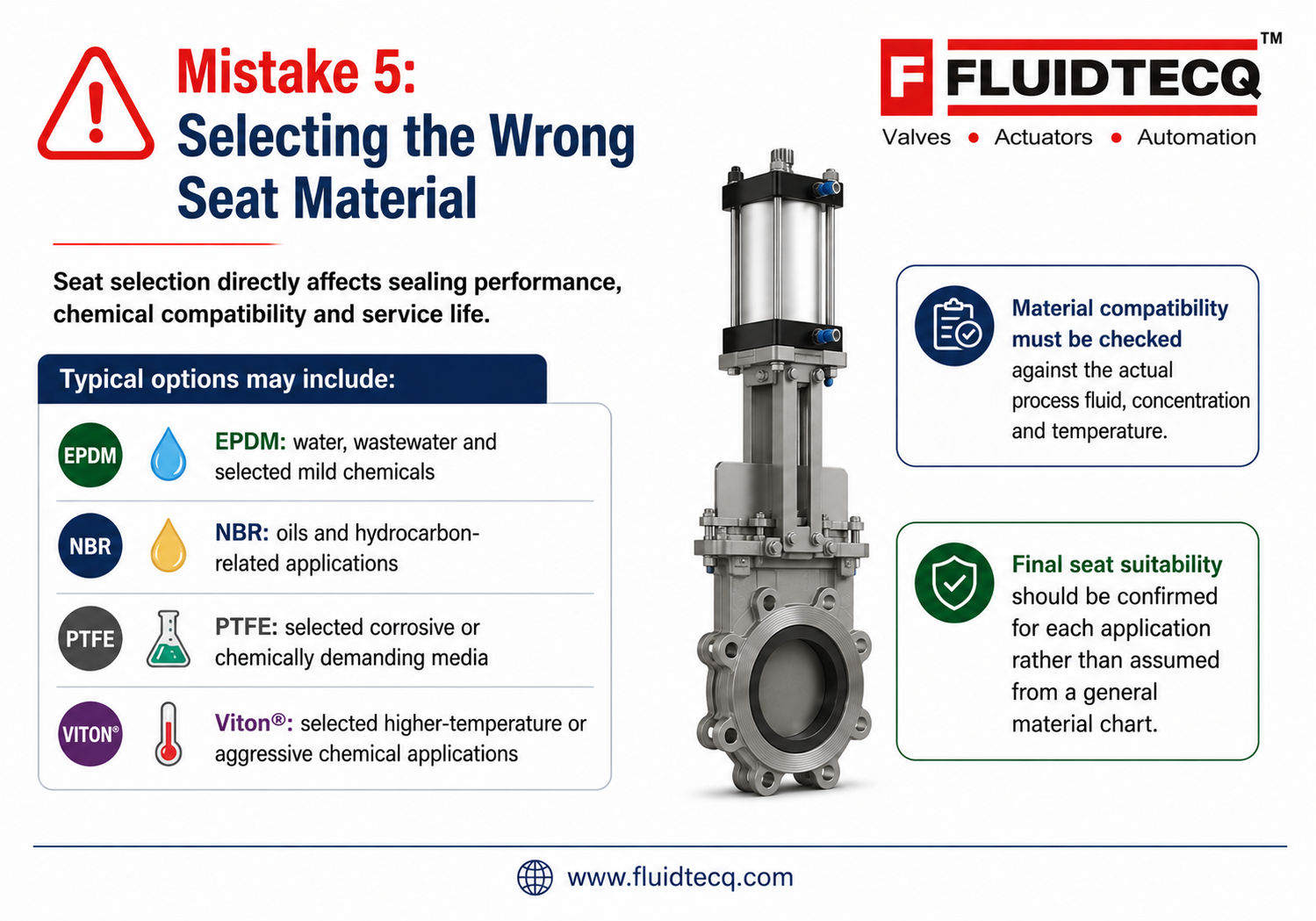
Mistake 5: Selecting the Wrong Seat Material
Seat selection directly affects sealing performance, chemical compatibility and service life.
Typical options may include:
EPDM: water, wastewater and selected mild chemicals
NBR: oils and hydrocarbon-related applications
PTFE: selected corrosive or chemically demanding media
Viton®: selected higher-temperature or aggressive chemical applications
Material compatibility must be checked against the actual process fluid, concentration and temperature.
Final seat suitability should be confirmed for each application rather than assumed from a general material chart.
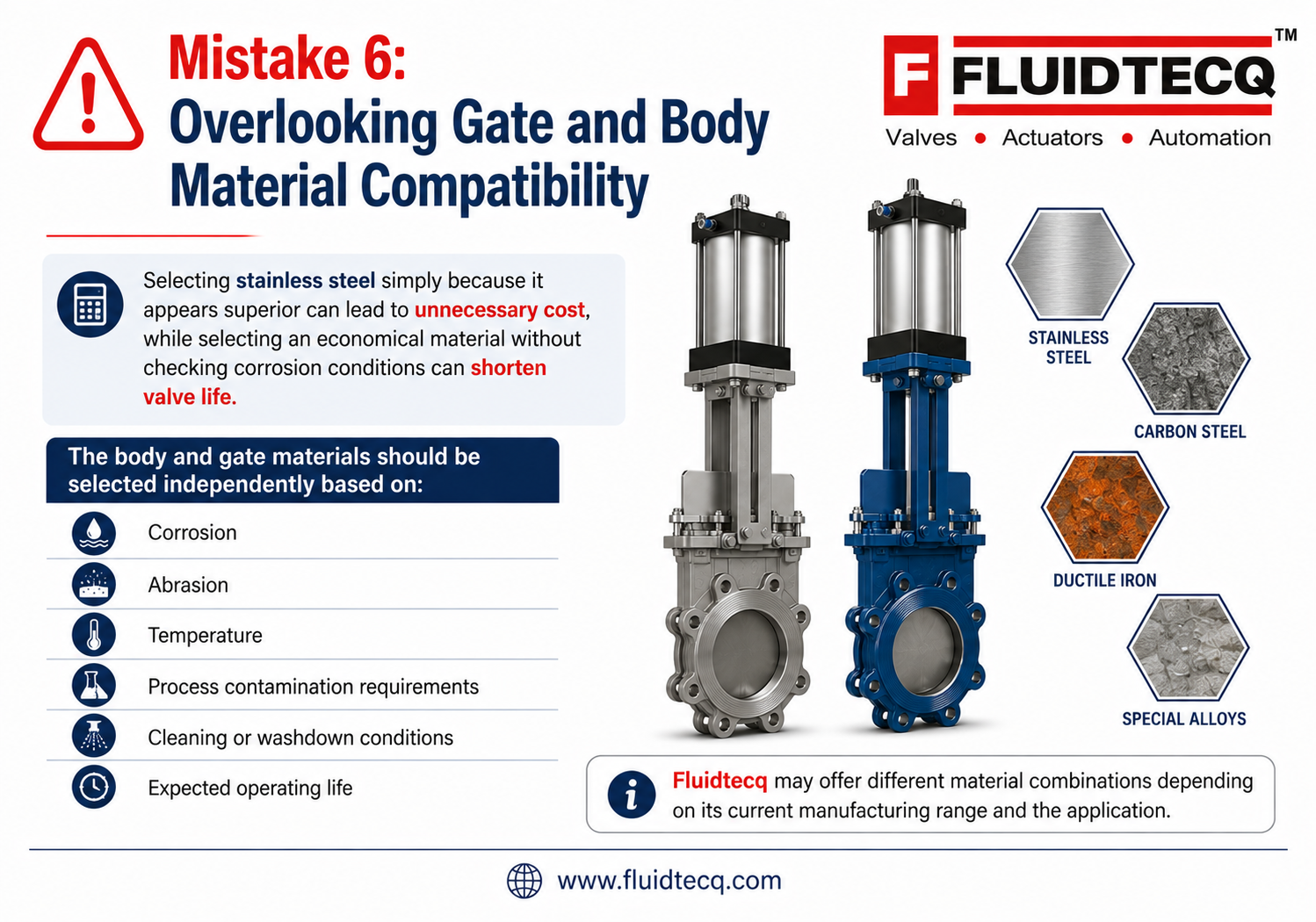
Mistake 6: Overlooking Gate and Body Material Compatibility
Selecting stainless steel simply because it appears superior can lead to unnecessary cost, while selecting an economical material without checking corrosion conditions can shorten valve life.
The body and gate materials should be selected independently based on:
Corrosion
Abrasion
Temperature
Process contamination requirements
Cleaning or washdown conditions
Expected operating life
Fluidtecq may offer different material combinations depending on its current manufacturing range and the application.
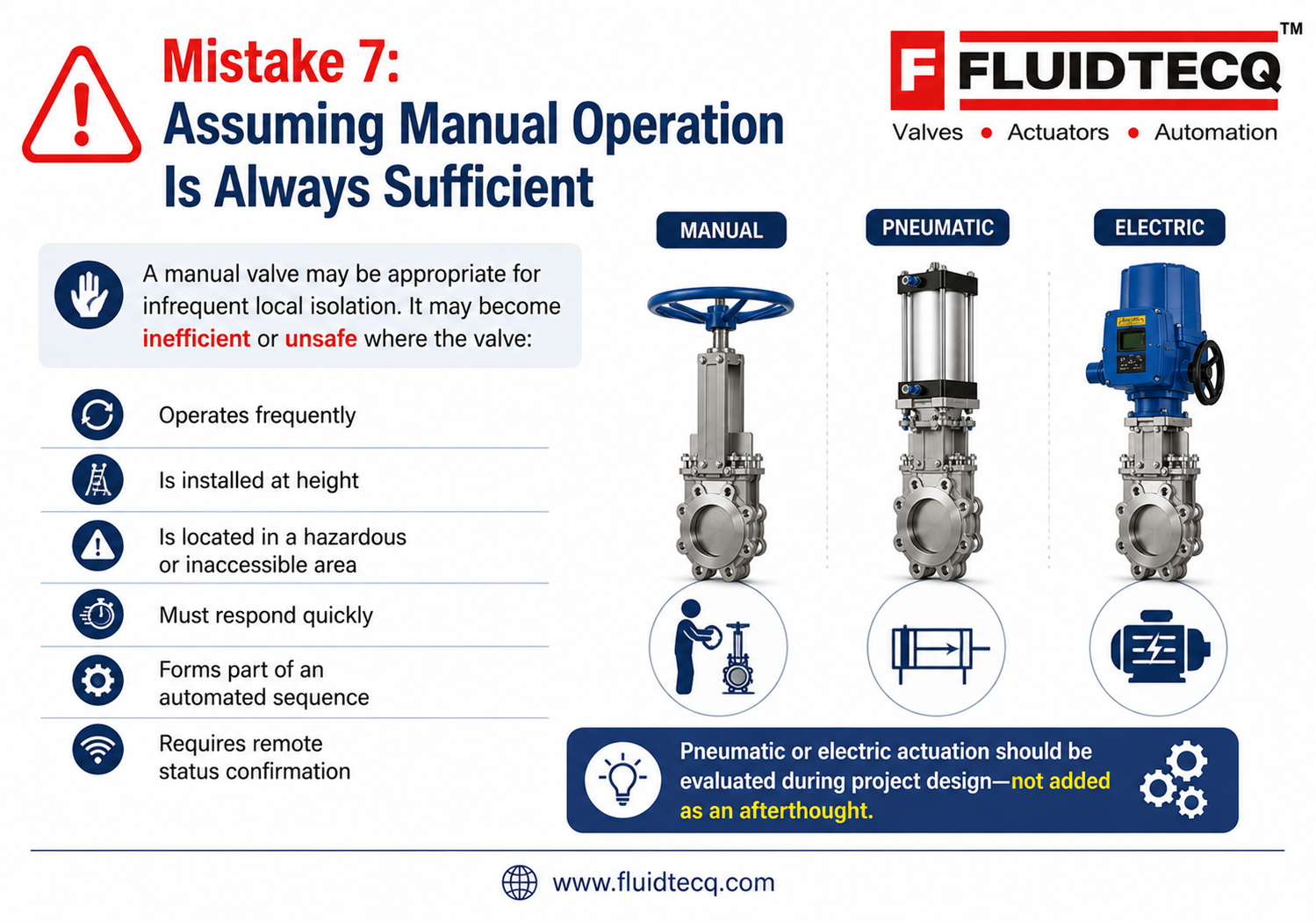
Mistake 7: Assuming Manual Operation Is Always Sufficient
A manual valve may be appropriate for infrequent local isolation. It may become inefficient or unsafe where the valve:
Operates frequently
Is installed at height
Is located in a hazardous or inaccessible area
Must respond quickly
Forms part of an automated sequence
Requires remote status confirmation
Pneumatic or electric actuation should be evaluated during project design—not added as an afterthought.
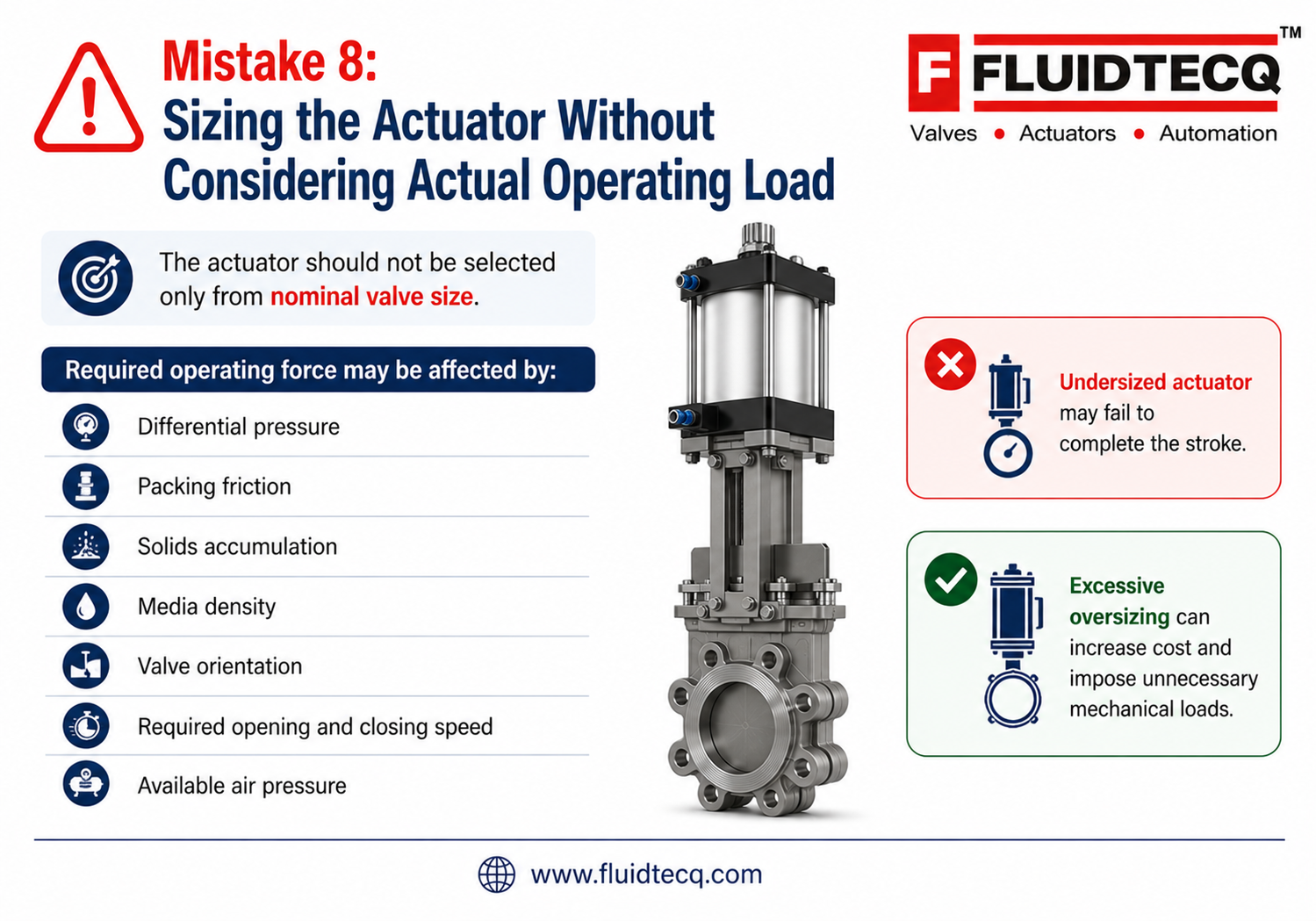
Mistake 8: Sizing the Actuator Without Considering Actual Operating Load
The actuator should not be selected only from nominal valve size.
Required operating force may be affected by:
Differential pressure
Packing friction
Solids accumulation
Media density
Valve orientation
Required opening and closing speed
Available air pressure
An undersized actuator may fail to complete the stroke. Excessive oversizing can increase cost and impose unnecessary mechanical loads.
Mistake 9: Forgetting Automation Accessories
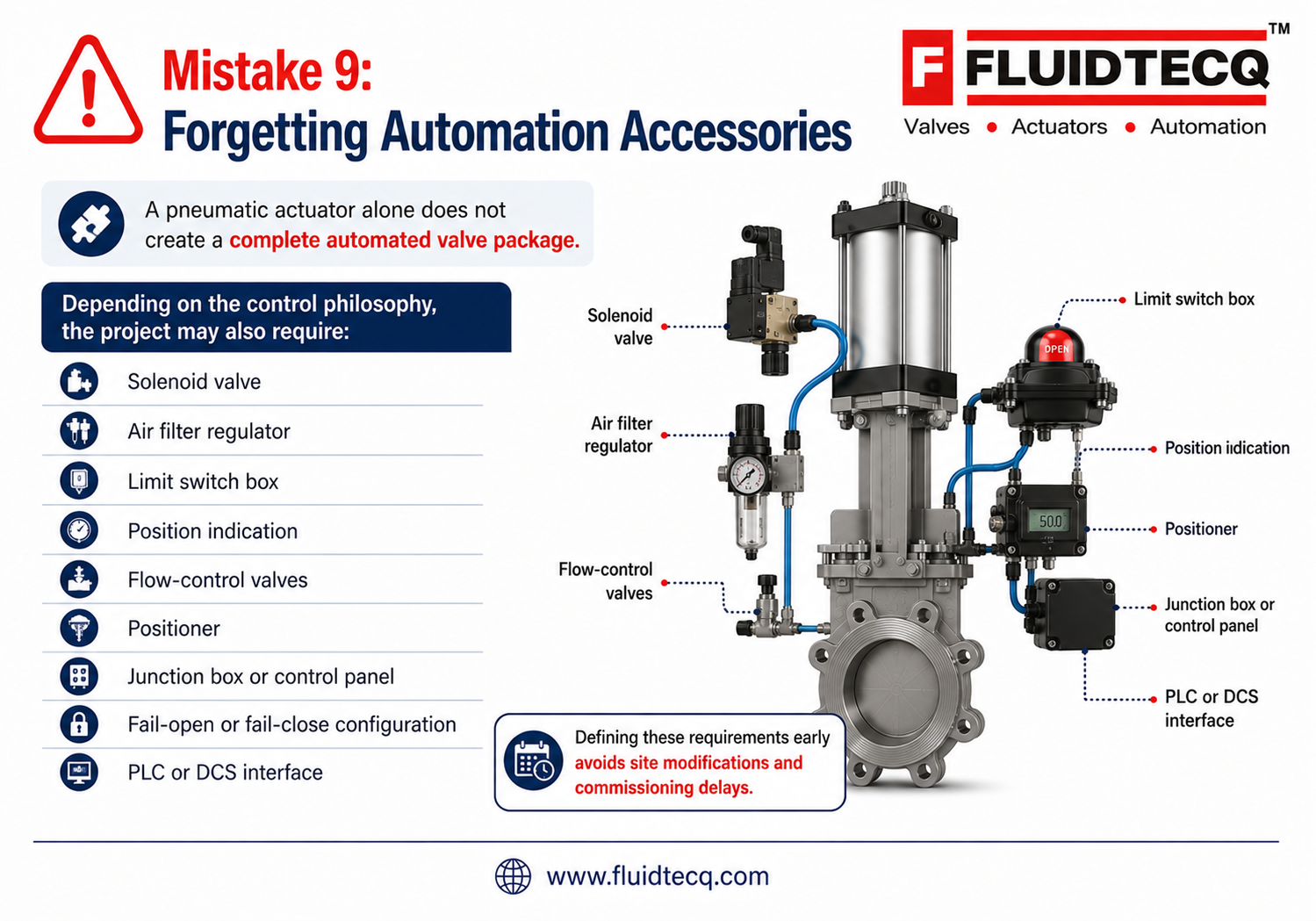
A pneumatic actuator alone does not create a complete automated valve package.
Depending on the control philosophy, the project may also require:
Solenoid valve
Air filter regulator
Limit switch box
Position indication
Flow-control valves
Positioner
Junction box or control panel
Fail-open or fail-close configuration
PLC or DCS interface
Defining these requirements early avoids site modifications and commissioning delays.
Mistake 10: Involving the Valve Manufacturer Too Late
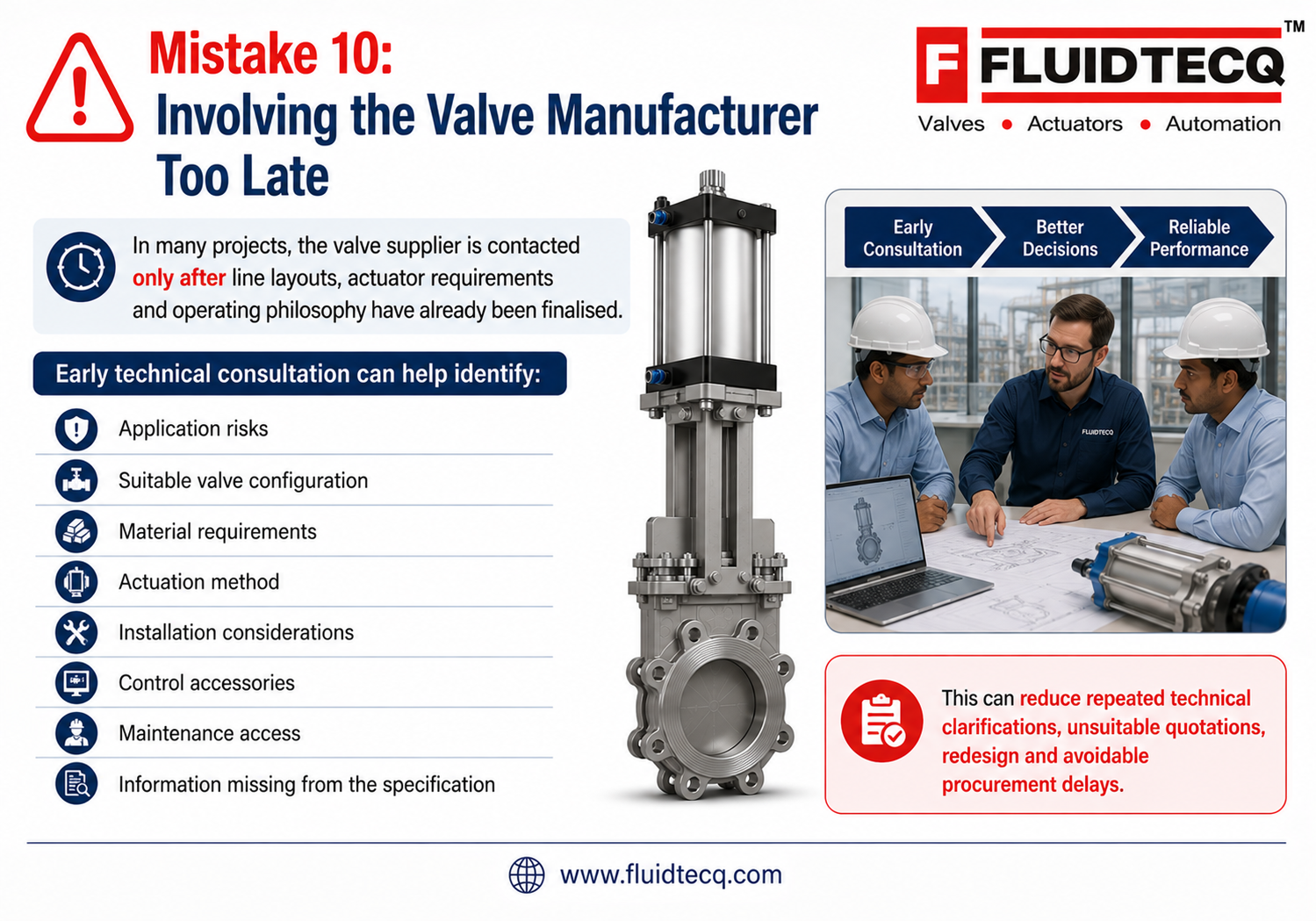
In many projects, the valve supplier is contacted only after line layouts, actuator requirements and operating philosophy have already been finalised.
Early technical consultation can help identify:
Application risks
Suitable valve configuration
Material requirements
Actuation method
Installation considerations
Control accessories
Maintenance access
Information missing from the specification
This can reduce repeated technical clarifications, unsuitable quotations, redesign and avoidable procurement delays.
Why Early Consultation with Fluidtecq Can Add Value
Fluidtecq’s role should be positioned beyond supplying an individual valve.
As an experienced Indian manufacturer of industrial flow-control valves and valve-automation solutions, Fluidtecq can work with project engineers, consultants, OEMs, EPC companies and plant teams to evaluate the complete operating requirement.
Early involvement can help customers:
Prepare clearer valve specifications
Identify application-specific risks
Select suitable construction materials
Match actuation to operating requirements
Define the complete automation package
Reduce technical revisions
Improve installation and commissioning readiness
Consider lifecycle performance—not only initial price
The final solution should be developed around the the process—not selected from a generic catalogue description.
Use “one of India’s leading companies” only when Fluidtecq has verifiable market-ranking evidence. Otherwise, “an experienced Indian manufacturer of industrial flow-control valves and automation solutions” is stronger and safer.
Procurement Checklist
Before requesting a quotation, provide:
Line size and connection standard
Process media
Solids concentration and particle size
Operating and design pressure
Operating and design temperature
Body, gate and seat material preference
Required sealing direction
Valve operating frequency
Manual, pneumatic or electric actuation
Available air pressure or electrical supply
Fail-safe requirement
Limit-switch and solenoid requirements
Installation orientation
Applicable testing or documentation requirements
Planning a Project Involving Knife Gate Valves?
Involve Fluidtecq at the specification stage.
Our team can review your process conditions, valve construction, material requirements and automation needs to help develop a practical flow-control solution for your project.



 by Hemal Mehta