Knife Gate Valve Manufacturer in India: Buyer’s Guide
Oct 19, 2026
by Hemal Mehta
How to Choose a Knife Gate Valve Manufacturer in India: A Guide for East African and Middle Eastern Buyers
Selecting a knife gate valve manufacturer in India involves more than comparing valve sizes and quotations. For overseas buyers, the decision also affects installation compatibility, commissioning, maintenance and the availability of replacement parts.
For procurement teams in East Africa and the Middle East, a clear technical enquiry helps manufacturers recommend a suitable valve and makes competing offers easier to evaluate.
Whether the destination is Kenya, Tanzania, Uganda, Saudi Arabia, the UAE or another regional market, the starting point is the same: define the operating duty before comparing the price.
1. Look for Application Questions Before Product Recommendations
A manufacturer should understand what the valve must handle.
A description such as “slurry service” leaves important questions unanswered. Slurries differ in solids concentration, particle size, abrasiveness and chemical composition. Dry powders introduce different concerns, including material accumulation and the load above a discharge valve.
Provide:
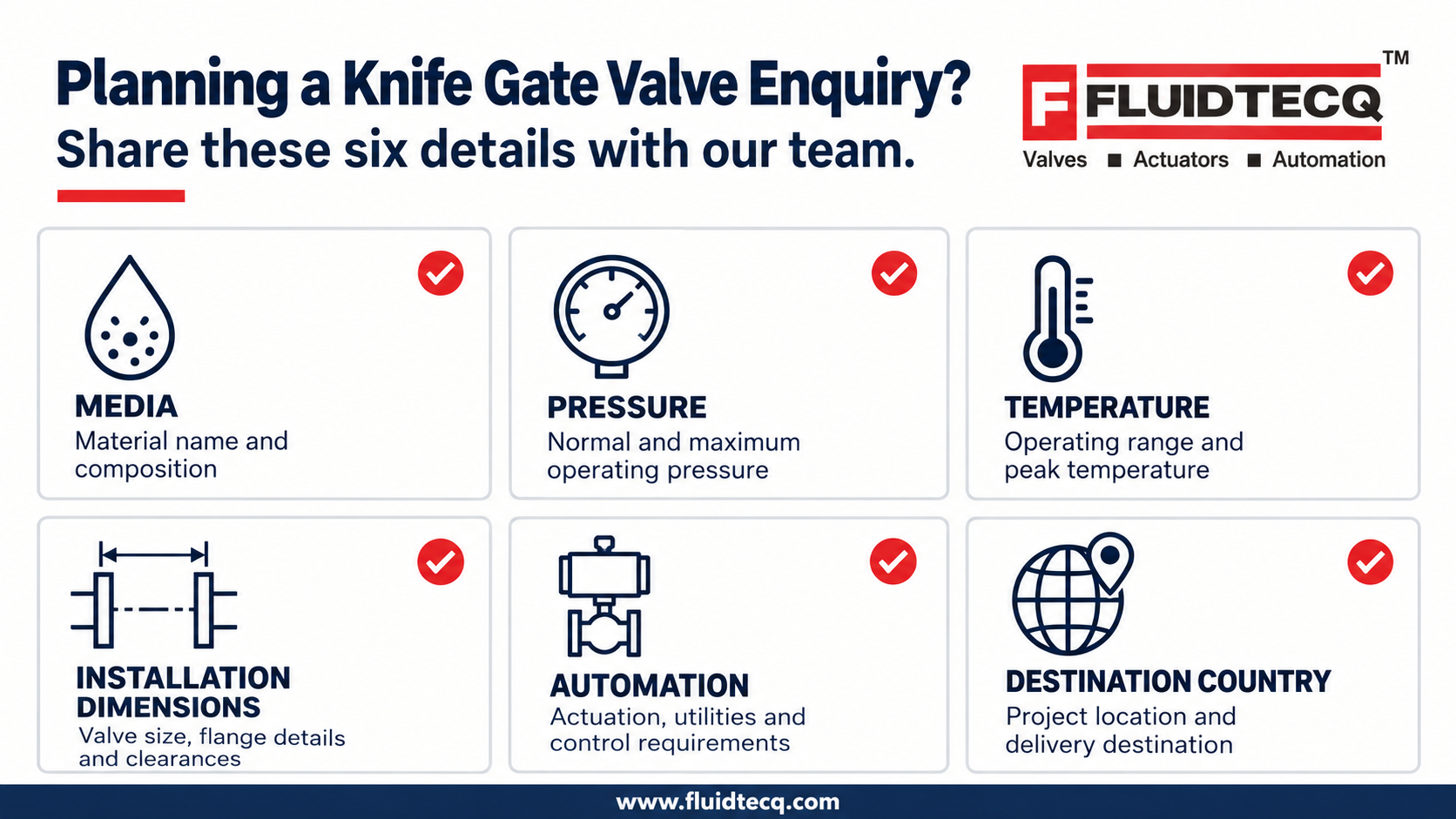
Media name and composition.
Solids concentration and particle characteristics, where relevant.
Normal and maximum operating pressure.
Operating temperature.
Required flow direction and shutoff performance.
Operating frequency and installation orientation.
A technically useful quotation should identify the conditions on which the selection is based.
“Stainless steel knife gate valve” is not a complete specification.
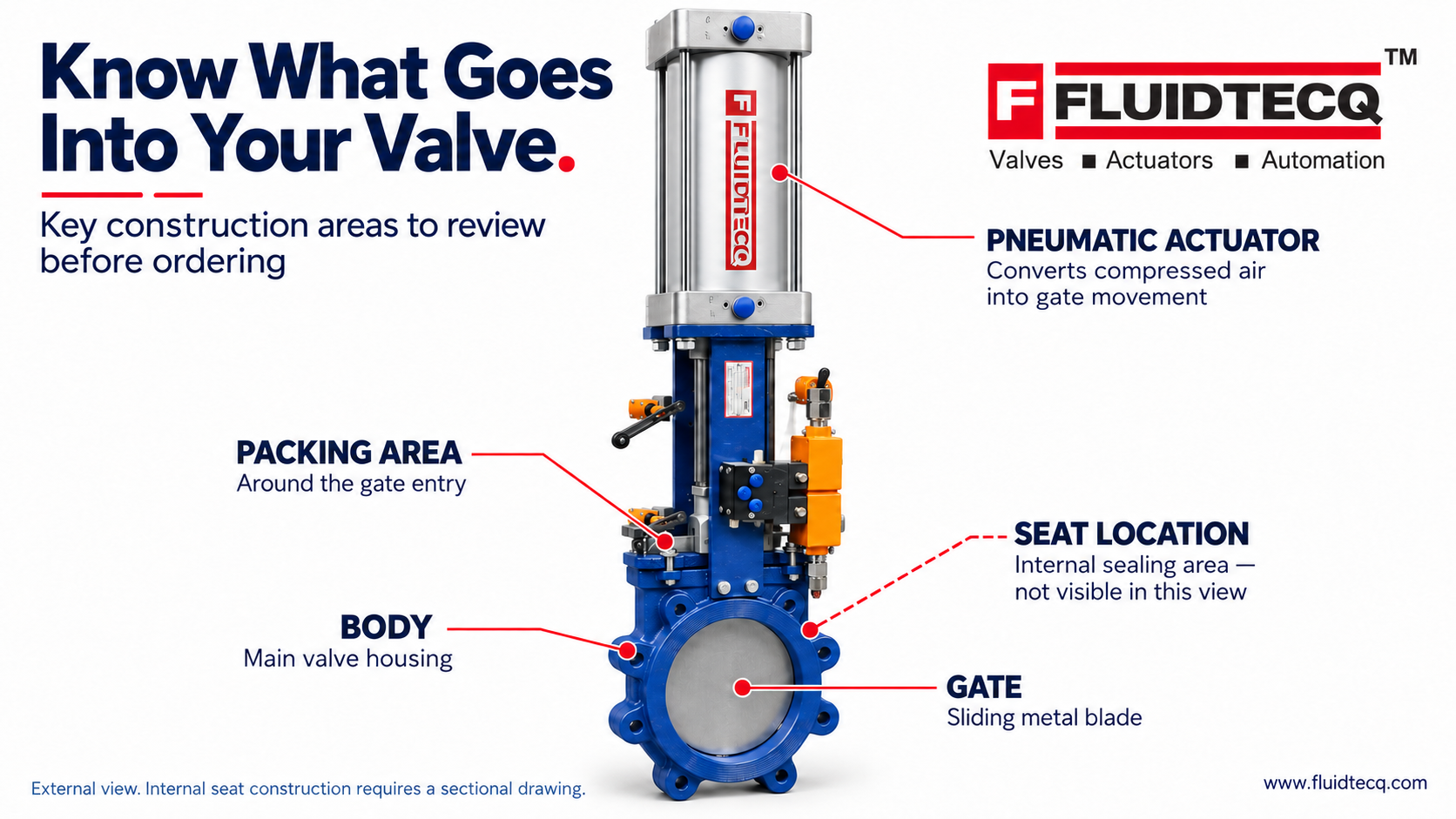
The body, gate, seat and packing may use different materials. Their suitability must be assessed against the process conditions.
Ask the manufacturer to identify the proposed materials and explain any limitations. Where corrosion, abrasion or elevated temperature is involved, request the basis for the recommendation.
Confirm whether the proposed valve is intended for unidirectional or bidirectional service and whether the required differential pressure applies in one or both directions.
A matching nominal diameter does not guarantee that a replacement valve will fit.
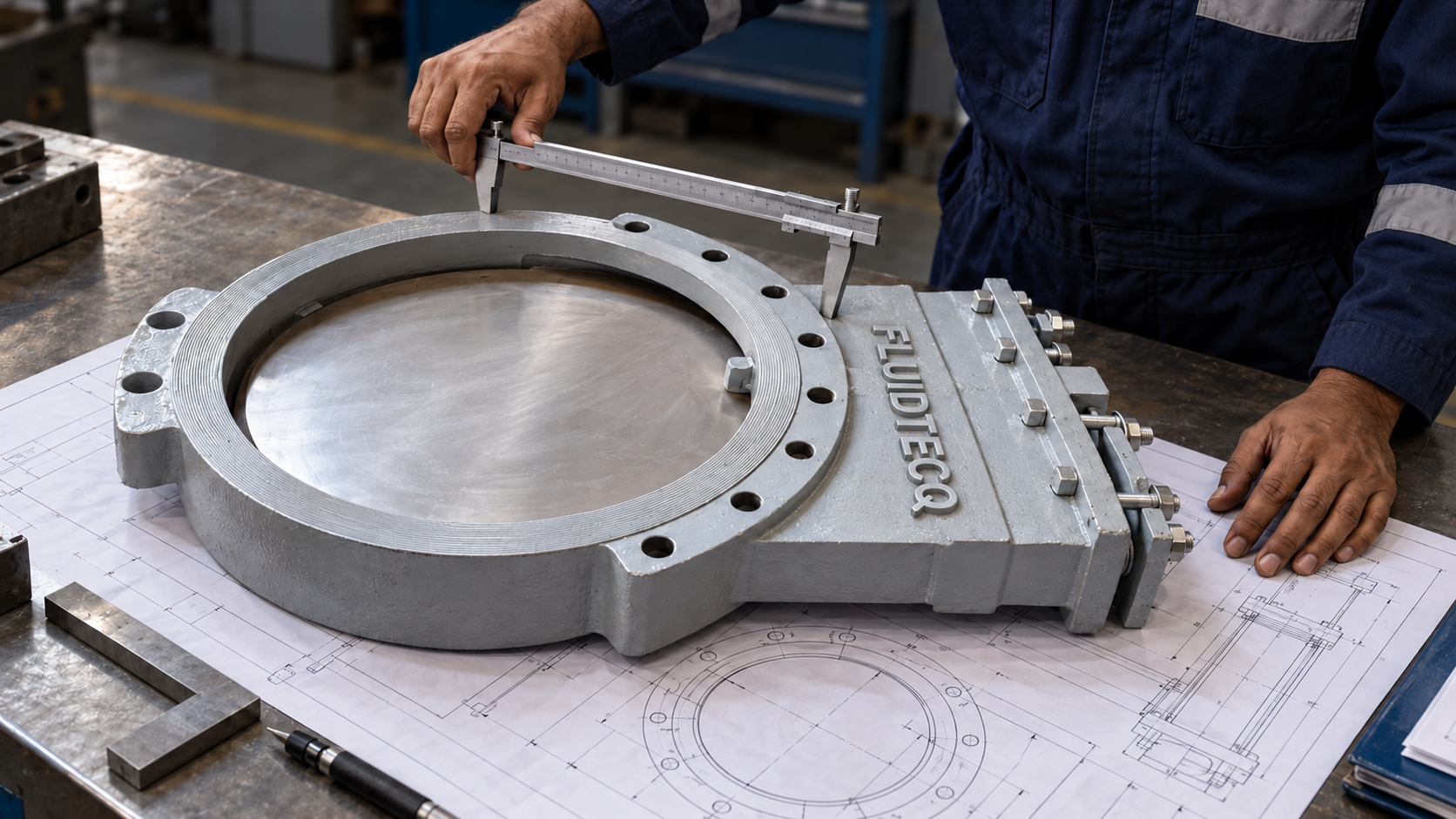
Before ordering, check the flange drilling, face-to-face dimension, installation clearances and actuator envelope against the existing equipment.
For replacement projects, share the current valve drawing or measured dimensions. For new installations, agree on the manufacturer’s general arrangement drawing before fabrication proceeds.
This is particularly useful when valves are being integrated into equipment sourced from different countries.
4. Review Automation as Part of the Package
If the valve will be automated, assess the valve, actuator and accessories together.
The enquiry should state the available air pressure or electrical supply, required operating time, control voltage, position feedback and response to utility failure.
A valve quotation and a separate actuator quotation may leave responsibility gaps unless the complete assembly is reviewed and accepted as a package.
5. Agree on Inspection and Documentation
Specify the documents required before placing the order.
Depending on the project, these may include:
Approved drawings and a technical datasheet.
Material certificates where specified.
Inspection and test reports.
Operating and maintenance instructions.
Spare-parts identification.
Automation wiring or pneumatic diagrams.
Agree on the test method, acceptance criteria and any inspection witness requirements. A statement such as “tested before dispatch” should be supported by a defined inspection scope.
6. Plan for Maintenance Before Shipment
Ask how seats, packing and other service parts are identified and replaced. Confirm which spares are recommended for commissioning and subsequent maintenance.
For overseas purchases, also agree on packing, shipment dimensions, delivery terms, warranty conditions and the procedure for technical support.
Local stock or on-site service should only be assumed when explicitly included in the supplier’s offer.
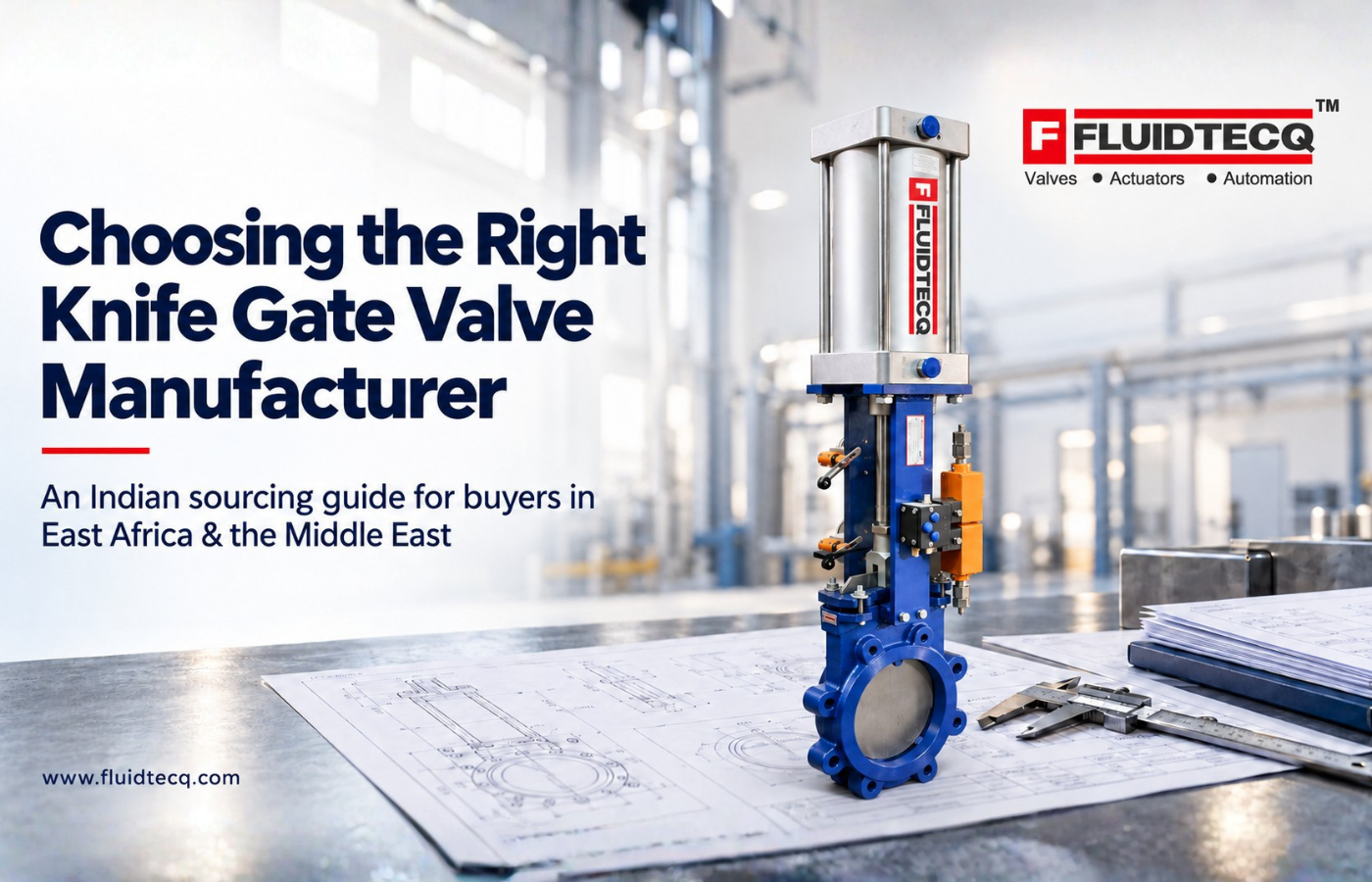
Fluidtecq manufactures knife gate valves in India for industrial process applications, with manual and automated configurations.
For projects across East Africa and the Middle East, share the destination country alongside your operating conditions, installation drawing and documentation requirements.
A clear enquiry helps establish the right technical basis before price and delivery are finalised.


 by Hemal Mehta